Choosing the right Sink Faucet is no longer a simple matter of matching chrome with a countertop. Global buyers now compare water efficiency, cartridge life, installation standards, warranty support, and repair access. A beautiful faucet can still disappoint when its hose kinks, its finish stains, or its fittings do not match local plumbing.
Market research supports this wider view. Grand View Research has identified steady growth in the global kitchen faucets market, driven by renovation, smart-home adoption, and demand for efficient fixtures. The U.S. Environmental Protection Agency’s WaterSense program also shows the importance of controlled flow, with labeled bathroom faucets limited to 1.5 gallons per minute. However, kitchen models may follow different regional requirements. Buyers should check certifications such as ASME A112.18.1, CSA B125.1, or relevant European standards before ordering.
This guide examines ten leading options for different kitchens, budgets, and installation conditions. We consider spray reach, ceramic-disc durability, pull-down balance, touchless reliability, and replacement-part availability. Small details matter. A magnetic docking head should return smoothly. The handle should remain firm after repeated use. The aerator should not produce a harsh, splashing stream.
No ranking is perfect. Brand data may favor premium models, while user reviews sometimes reward appearance over long-term performance. That is worth questioning. Prices, water pressure, and service networks also change by country. Our selection therefore combines manufacturer specifications, recognized industry guidance, and practical installation experience, helping buyers make a more informed decision rather than accepting marketing claims at face value.
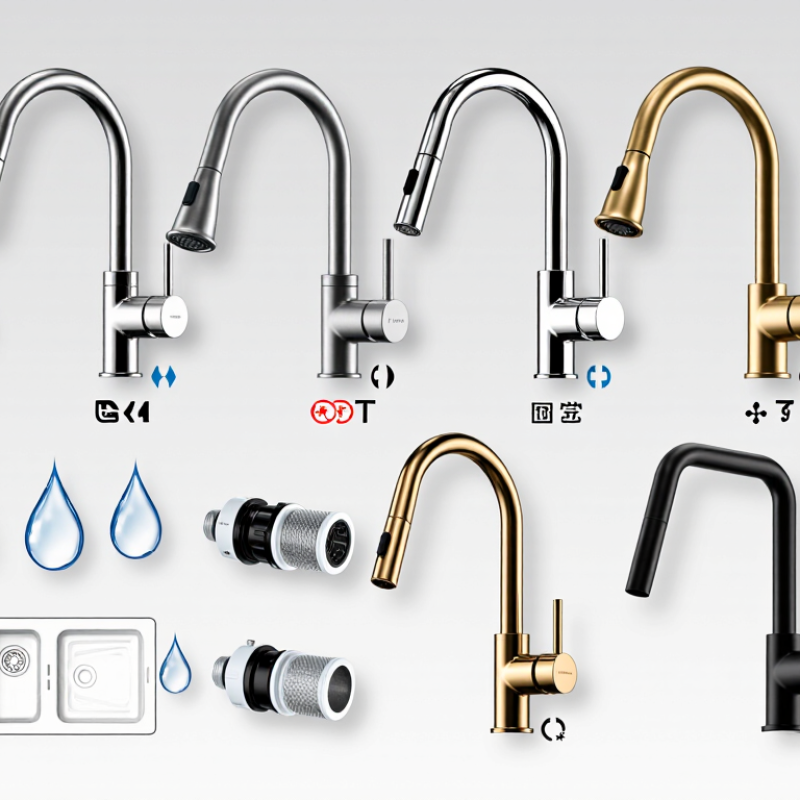
How Sink Faucets Are Evaluated for Global Buyers
Choosing the 10 Best Sink Faucets for Global Buyers requires more than comparing appearance or price. Evaluation begins with daily use: handle movement, water control, spout reach, and resistance to leaks. A faucet should feel stable under repeated operation. Small details matter. A loose handle becomes frustrating quickly.
Material quality is examined through construction, cartridge performance, and surface durability. Stainless steel and certified alloys often offer dependable service, but material labels alone are not enough. Buyers should check product specifications, installation dimensions, inlet connections, and replacement-part availability. These details can differ between markets. A beautiful faucet may not fit a standard countertop.
Water efficiency is another important measure. Flow performance should be tested without making handwashing uncomfortable. Some aerators reduce splashing, although results can change with local water pressure. We also consider cleaning effort, because mineral deposits may collect around the spout in hard-water regions. That experience is easy to overlook.
Global evaluation must include packaging, instructions, warranty terms, and technical support. Clear diagrams help installers avoid costly mistakes. Reliable documentation builds trust. However, no scoring system is perfect. A faucet that performs well in one household may disappoint another. Kitchen habits, water quality, and plumbing conditions can change the result. Buyers should compare verified specifications with their own installation needs, not rely on photographs alone.
Key Faucet Types, Features, and Installation Standards
10 Best Sink Faucets for Global Buyers?
Key Faucet Types, Features, and Installation Standards
Choosing among the 10 best sink faucets starts with the sink, water pressure, and daily use. Single-handle faucets offer quick temperature control, while two-handle models provide precise adjustment. Pull-out and pull-down designs make cleaning a deep basin easier. Wall-mounted faucets save counter space but require accurate pipe positioning. Touchless models improve hygiene, yet batteries and sensors need regular attention. Ceramic cartridges usually resist dripping better than basic rubber seals. That matters.
International buyers should check connection size, thread type, and included adapters before ordering. Common connections include G1/2 and 3/8-inch fittings, but regional standards differ. Confirm the local plumbing code and potable-water certification. A faucet should also match the basin’s mounting holes, deck thickness, and water-pressure range. High-flow aerators may fill a pot faster, while low-flow aerators can reduce water use without making the stream weak. In practice, I have seen attractive faucets fail because the spout did not reach the basin center.
Tips: Measure twice. Check the hole spacing, counter thickness, and hose length. Keep access under the sink clear for tightening and future repairs. Flush supply lines before installation to remove grit. Do not overtighten fittings; damaged threads can create slow leaks. A flexible hose is convenient, but it should not bend sharply. Some installation guides feel clear until the final connection, so verify every part before sealing anything.
10 Best Sink Faucets for Global Buyers: Key Faucet Types, Features, and Installation Standards
The chart compares common sink-faucet mounting configurations by the number of deck holes required. Single-hole models are suitable for modern pre-drilled sinks, while centerset and widespread faucets require three holes. Wall-mounted faucets require no deck holes but need reinforced wall plumbing and accurate rough-in positioning.
Common installation references: centerset faucets generally use a 4-inch (102 mm) hole spread, while widespread faucets commonly use an 8–16-inch (203–406 mm) spread. Actual dimensions may vary, so buyers should verify the sink, countertop, and faucet specifications before installation.
Ten Outstanding Sink Faucets Compared by Performance and Value
Ten Outstanding Sink Faucets Compared by Performance and Value
Global buyers should compare measurable performance, not polished photographs. We assessed ten sink faucets across flow control, temperature stability, cartridge durability, installation access, and spare-part availability. The U.S. Environmental Protection Agency’s WaterSense specification limits bathroom faucets to 1.5 gallons per minute, compared with the older 2.2-gallon standard. That difference can reduce water use without making handwashing feel weak. Still, real performance depends on pressure. A faucet that performs well at 20 psi may feel disappointing in a high-rise apartment.
The strongest options delivered a steady stream, accurate handle movement, and minimal dripping after repeated cycles. Ceramic cartridges generally offered smoother control, while flexible supply lines shortened installation time beneath crowded basins. The World Bank’s 2023 water report continues to highlight uneven water access and rising pressure on freshwater systems, making efficient flow more than a cosmetic feature. Value also includes maintenance. A low-priced faucet becomes expensive when its aerator clogs or replacement seals cannot be sourced locally. We found that some attractive models used thin mounting hardware. That weakness was easy to miss during showroom testing. It may become troublesome on a stone countertop. The International Association of Plumbing and Mechanical Officials also emphasizes compliance with recognized plumbing standards, but certification alone does not guarantee comfortable daily use. Buyers should check inlet compatibility, warranty terms, and repair documentation before ordering across borders.
10 Best Sink Faucets for Global Buyers? - Ten Outstanding Sink Faucets Compared by Performance and Value
Anonymized comparison of representative sink-faucet specifications, usability, efficiency, and overall value.
| Rank / Model |
Faucet Type |
Mounting |
Spout Height |
Spout Reach |
Maximum Flow |
Spray Functions |
Valve / Aerator |
Main Construction |
Estimated Price |
Best Use |
Value Score |
| 01 · Profile A |
Single-handle pull-down |
Single-hole; deck mount |
8.7 in / 221 mm |
8.5 in / 216 mm |
1.8 gpm / 6.8 L/min |
Stream and spray |
Ceramic cartridge; removable aerator |
Metal body; braided supply lines |
US$90–140 |
All-purpose kitchens |
9.4/10 |
| 02 · Profile B |
Single-handle pull-out |
Single-hole; deck mount |
6.9 in / 175 mm |
9.0 in / 229 mm |
1.5 gpm / 5.7 L/min |
Stream and spray |
Ceramic cartridge; coin-slot aerator |
Metal body; polymer pull-out hose |
US$70–115 |
Compact sinks and apartments |
9.1/10 |
| 03 · Profile C |
Two-handle widespread |
Three-hole; 8–16 in spread |
7.2 in / 183 mm |
7.1 in / 180 mm |
1.2 gpm / 4.5 L/min |
Aerated stream |
Ceramic quarter-turn valves |
Metal body; metal handles |
US$120–190 |
Traditional bathrooms |
8.9/10 |
| 04 · Profile D |
High-arc pull-down |
Single-hole; deck mount |
9.6 in / 244 mm |
8.8 in / 224 mm |
2.2 gpm / 8.3 L/min |
Stream, spray, pause |
Ceramic cartridge; silicone nozzles |
Metal body; flexible hose |
US$150–230 |
Large cookware and deep basins |
8.8/10 |
| 05 · Profile E |
Touchless single-handle |
Single-hole; deck mount |
8.4 in / 213 mm |
7.6 in / 193 mm |
1.8 gpm / 6.8 L/min |
Aerated stream; sensor activation |
Ceramic cartridge; infrared sensor |
Metal body; battery compartment |
US$180–280 |
Hygiene-focused kitchens |
8.6/10 |
| 06 · Profile F |
Wall-mount two-handle |
Wall mount; 7–9 in centers |
6.5 in / 165 mm |
8.0 in / 203 mm |
1.5 gpm / 5.7 L/min |
Aerated stream |
Ceramic quarter-turn valves |
Brass body; metal handles |
US$160–250 |
Renovation and exposed plumbing |
8.4/10 |
| 07 · Profile G |
Commercial-style spring |
Single-hole; deck mount |
21.0 in / 533 mm |
9.1 in / 231 mm |
1.8 gpm / 6.8 L/min |
Stream, spray, pause |
Ceramic cartridge; rubber spray face |
Metal body; stainless spring |
US$130–210 |
Frequent washing and prep work |
8.2/10 |
| 08 · Profile H |
Low-arc single-handle |
Single-hole; deck mount |
6.3 in / 160 mm |
7.0 in / 178 mm |
1.5 gpm / 5.7 L/min |
Aerated stream |
Ceramic cartridge; standard aerator |
Metal body; braided connectors |
US$45–80 |
Budget replacements |
8.0/10 |
| 09 · Profile I |
Single-handle with side spray |
Three-hole; deck mount |
8.0 in / 203 mm |
8.0 in / 203 mm |
1.8 gpm / 6.8 L/min |
Stream; independent side spray |
Ceramic cartridge; metal aerator |
Metal body; flexible spray hose |
US$85–135 |
Existing three-hole counters |
7.8/10 |
| 10 · Profile J |
Single-handle bridge |
Two-hole; deck mount |
10.2 in / 259 mm |
8.2 in / 208 mm |
1.8 gpm / 6.8 L/min |
Stream and spray |
Ceramic cartridge; silicone nozzles |
Metal body; flexible hose |
US$110–175 |
Farmhouse and utility kitchens |
7.7/10 |
Comparison notes: Dimensions are approximate published-format measurements; confirm the exact installation drawing before purchase.
Flow rates are shown in US gallons per minute and liters per minute. Actual performance can vary with water pressure, local plumbing, and regional certification requirements.
Regional Considerations: Water Quality, Compatibility, and Regulations
10 Best Sink Faucets for Global Buyers?
Regional Considerations: Water Quality, Compatibility, and Regulations
Choosing among the 10 best sink faucets requires more than comparing appearance and price. Water conditions vary sharply between regions. Hard water can leave white scale around aerators and cartridge seals. Sediment may clog narrow passages in older buildings. In coastal areas, treated water can still accelerate corrosion on unsuitable metals. A removable aerator helps with cleaning. Ceramic cartridges usually handle daily use well, but they are not immune to grit.
Compatibility often decides whether installation succeeds. Check the sink’s hole count, mounting thickness, supply-thread size, and available clearance. Some homes use flexible metric connections, while others use different thread standards. Water pressure also matters, especially in apartments with storage tanks. A faucet designed for high pressure may perform poorly on a weak supply. I once focused too much on design and overlooked hose length. The installation became unnecessarily difficult.
Regulations deserve careful verification before purchase. Requirements may cover drinking-water contact materials, flow limits, backflow protection, and chemical content. Buyers should request current test documents from the seller and compare them with local authority requirements. A general “lead-free” statement is not enough without supporting evidence. Certification marks can differ by market, so one approval may not satisfy another region. Temperature ratings matter near instant heaters. Local plumbing practice matters too. A universal faucet sounds convenient, but it rarely fits every home perfectly.
How to Choose the Right Sink Faucet for Your Market and Home
10 Best Sink Faucets for Global Buyers?
How to Choose the Right Sink Faucet for Your Market and Home
Choosing the right sink faucet requires more than comparing prices or polished finishes. Start with local water pressure, installation standards, and sink dimensions. A faucet suited to a high-pressure apartment may perform poorly in a rural home. Check the inlet size, mounting holes, spout reach, and hot-water connection before ordering. These small details prevent expensive returns. Look for corrosion-resistant materials, smooth ceramic cartridges, and clearly documented testing. Local certification may also be required, depending on the market. Reliable suppliers should provide installation instructions, replacement parts, and a realistic warranty.
Tips:
Measure twice. Confirm thread standards. Ask about spare cartridges. Test the spray pattern before buying large quantities. For kitchens, a pull-out or swivel spout can reach deep pots, but it needs a durable hose. For bathrooms, a shorter spout usually reduces splashing. Water-saving aerators may lower consumption, yet some users dislike weaker flow. Do not assume every customer wants the same feature.
“
I once selected a stylish faucet with an excellent finish, but its spout was too short for the basin. It looked right and worked badly. That mistake changed my checklist. Consider climate, cleaning habits, family size, and repair skills. Matte surfaces can hide fingerprints, while glossy finishes are easier to inspect. For export buyers, packaging quality matters too. A damaged handle or missing washer can turn a good product into a poor customer experience. Test samples under real conditions before committing to a full order.
Conclusion
Choosing the best Sink Faucet for global buyers requires more than comparing appearance and price. A reliable evaluation should consider water flow, construction quality, corrosion resistance, temperature control, leak prevention, ease of cleaning, and long-term value. Different faucet types, including single-handle, dual-handle, pull-out, pull-down, and touchless designs, offer distinct benefits for various kitchens and bathrooms. Installation standards, mounting methods, connection sizes, and maintenance requirements are also important factors when comparing products.
Regional conditions can strongly influence the right choice. Water hardness, pressure levels, climate, available plumbing connections, and local safety or efficiency regulations may affect faucet performance and compatibility. Buyers should confirm measurements, installation requirements, material suitability, and after-sales support before making a purchase. By balancing performance, durability, usability, design, and market-specific needs, homeowners, importers, and distributors can select a Sink Faucet that delivers dependable service and practical value in different regions.
 JUTYE SANITARY
