JUTYE SANITARY JUTYE SANITARY

2026 Best Towel Bar Types for Global Buyers

Time:2026-10-11 Author:Amelia
0%

Choosing the right Towel Bar in 2026 requires more than matching a bathroom’s finish. Global buyers now compare space efficiency, corrosion resistance, installation methods, and user habits. A slim bar may suit a compact apartment in Tokyo, while a wider, double-bar design may serve a busy family bathroom in Toronto. Material also matters. Stainless steel handles humidity well, but surface quality varies between grades and suppliers.

Richard Grohe, former Hansgrohe executive and a respected bathroom fittings specialist, once observed, “The best bathroom design disappears into daily life.” This principle remains useful when reviewing Towel Bar types. A good product should hold a damp towel without sagging, turning, or touching the wall. Small details matter. So does the mounting plate.

This guide examines wall-mounted, freestanding, heated, double, swivel, and ladder-style Towel Bar options for international buyers. It considers practical use, visual balance, packaging, installation, and long-term maintenance. Regional bathroom sizes and ventilation conditions can change the best choice. There is no universal winner.

Some assumptions deserve reconsideration. A premium finish does not always mean stronger construction. A heated model may feel luxurious, yet it can increase energy use and installation complexity. Even a beautiful bar can disappoint when screws loosen after several months.

The following overview connects product design with real purchasing conditions. It aims to help importers, retailers, contractors, and homeowners make clearer decisions. Towel Bar selection should be functional first, attractive second, and honest about its limitations.

2026 Best Towel Bar Types for Global Buyers

What Is a Towel Bar and Why Does Its Type Matter?

2026 Best Towel Bar Types for Global Buyers

What Is a Towel Bar and Why Does Its Type Matter?

A towel bar is a bathroom fixture that holds towels open for drying. It usually includes a horizontal rail, wall mounts, and fixing hardware. Its type matters because each design manages space, airflow, weight, and daily movement differently.

A single bar suits one bath towel and needs a clear wall area. A double bar offers more capacity, but towels may dry slowly when rails sit too close. A towel ring works well for hand towels near a basin. Ladder-style rails provide several levels and better air circulation. However, they can collect more dust and require careful cleaning.

Material choice affects long-term reliability. Stainless steel handles humid rooms well when its grade suits the environment. Aluminum is lighter, but thin sections may bend under heavy towels. Solid mounting is equally important. Tile, drywall, and concrete need different anchors, and weak fixing can loosen after repeated pulling. Check the wall structure before ordering.

Global buyers should also review rail length, hole spacing, corrosion resistance, and included hardware. Regional installation habits can differ. A product designed for one wall system may not fit another neatly. I once underestimated clearance beside a cabinet, and the door could not open fully. That small mistake changed the entire layout. Measuring twice is less impressive than repairing once, but it works.

Main Towel Bar Types and Their Key Differences

Wall-mounted straight towel bars remain the most practical choice for global buyers. They need little wall space and suit hotels, apartments, and family bathrooms. Swivel bars add flexible drying positions, especially beside a narrow basin. Ring rails work better for hand towels, but they hold less fabric. The difference is simple: capacity, reach, and installation depth.

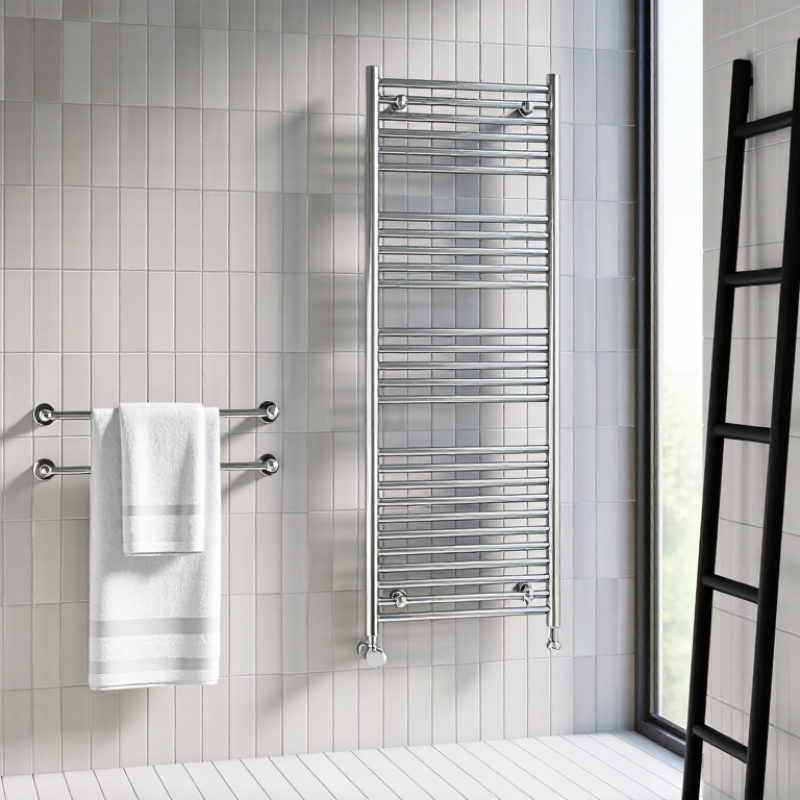
Ladder-style rails offer several levels for separating bath towels from hand towels. They also create a stronger visual feature. Freestanding rails avoid drilling, although they can move on wet floors. Heated bars provide faster drying in cold or humid rooms. They require safe electrical installation and compatible regional voltage. Check this carefully. A beautiful rail becomes a liability when moisture protection is ignored.

The 2024 U.S. Houzz Bathroom Trends Study collected responses from more than 1,000 homeowners and tracks renovation priorities, including storage, comfort, and usability. These findings support choosing towel hardware by daily behavior, not appearance alone. The National Kitchen and Bath Association’s 2024 design trends reporting also highlights aging-friendly bathrooms and easier access. That favors swivel rails, reachable heights, and firm wall fixing. Stainless steel generally handles humidity better than ordinary steel, but finish quality still varies. I would not assume a higher price guarantees durability. Review corrosion testing, load ratings, mounting plates, and installation instructions before comparing suppliers.

How to Choose Towel Bar Materials, Sizes, and Finishes

For global buyers, towel bar selection starts with the installation environment, not appearance. Grand View Research estimates the global bathroom accessories market will grow strongly through 2030, driven by renovation and new housing demand. That growth creates more choices, but not always better choices. A towel bar near a shower needs stronger corrosion resistance. In coastal projects, 316 stainless steel is safer than standard 304 stainless steel. It costs more. It may still prevent early replacement.

Size affects daily comfort. An 18-inch bar suits a compact powder room. A 24-inch model fits one large bath towel with less folding. A 30-inch bar offers better airflow, but requires wider wall support. The U.S. Environmental Protection Agency reports that improved bathroom fixtures can reduce household water use significantly, yet drying time also matters. Poor airflow leaves towels damp. A simple 50–75 millimeter wall clearance can help.

Finish selection should match cleaning routines and local humidity. PVD finishes generally resist abrasion better than decorative plating, while powder coating suits controlled-color projects. Chrome remains practical, but water spots show quickly. Check the substrate beneath the finish. A thin decorative layer cannot rescue weak zinc alloy. That is an easy mistake. Industry testing should include salt-spray exposure, load testing, and repeated cleaning cycles. European and North American buyers should also verify mounting-hole spacing, metric or imperial screws, and accessible replacement hardware. Reports offer useful market direction, but actual bathroom conditions still decide performance.

2026 Best Towel Bar Types for Global Buyers

How to Choose Towel Bar Materials, Sizes, and Finishes

Stainless steel 304 provides a strong balance of corrosion resistance, durability, and cost for most bathrooms. Stainless steel 316 offers better resistance in coastal or high-humidity environments because of its molybdenum content. Brass is durable and well suited to premium designs, while aluminum is lightweight and typically more affordable. Common towel bar lengths include 18 inches for compact spaces, 24 inches for standard bathrooms, and 27–30 inches for larger wall areas. Brushed, polished, matte black, and chrome finishes are widely selected according to style and maintenance preferences.

Installation Methods for Different Bathroom Layouts

2026 Best Towel Bar Types for Global Buyers

Installation Methods for Different Bathroom Layouts

Bathroom layouts require different towel-bar solutions. In a compact bathroom, a single 18-inch bar beside the basin saves wall space. A 24-inch bar suits family bathrooms with wider circulation areas. Corner layouts benefit from L-shaped or pivoting bars, especially near a shower enclosure. For wet rooms, choose corrosion-resistant materials and keep the bar away from constant splash zones.

Installation depends on the wall substrate. On drywall, use suitable anchors or fix directly into studs. On tile, drill slowly with a diamond bit and avoid grout edges. Concealed screw mounts usually provide the most reliable long-term support. Adhesive mounting can work on smooth, clean surfaces, but humidity and weak bonding remain concerns. Suction models are better for temporary use. They should not carry heavy, wet towels. The 2024 International Residential Code and accessibility guidance also show why clearance matters around fixtures, although local requirements differ. Measure twice.

Tips: Mark the fixing points with removable tape. Test door swings and cabinet openings first. Leave enough space for a towel to dry, not merely hang. Grand View Research’s 2024 Bathroom Accessories Market report estimated the global market at about USD 22.6 billion in 2023, with projected growth near 10.5% annually through 2030. That growth may encourage faster product choices. Still, installation quality matters more than appearance. A polished bar on a hollow wall can become a costly mistake. Personally, I would question adhesive-only mounting in a steamy, heavily used bathroom.

Global Buying Factors: Quality, Standards, and Supplier Selection

For global buyers, the best towel bar type depends on use, climate, and installation quality. Stainless steel suits humid bathrooms and frequent cleaning. Brass offers strength, but its surface finish needs careful inspection. Heated towel bars add comfort, yet they require verified electrical safety and local compatibility.

Quality evidence matters more than polished photos. ISO’s 2023 Survey recorded 1,265,216 ISO 9001 certificates across 189 economies. However, certification covers a management system, not every towel bar. Ask suppliers for material grades, coating specifications, load-test results, and corrosion reports. ISO 9227 or ASTM B117 testing can reveal coating weaknesses, but test duration must be clearly stated. A failed finish may appear after months, not during a showroom inspection.

Supplier selection also includes documentation and delivery discipline. UNCTAD’s Review of Maritime Transport reports that ships carry over 80% of world trade by volume. Packaging therefore deserves practical review: protected corners, sealed hardware, moisture barriers, and readable installation guides. Request a production sample before placing a large order. Small details matter. I would not rely on a single laboratory report. Reports can be genuine but outdated, incomplete, or unrelated to the final finish. Check batch traceability, factory inspection records, replacement-part support, and realistic lead times. The cheapest quote may quietly exclude testing, packaging, or after-sales responsibility.

FAQS

What is a towel bar used for?

A towel bar holds towels open for drying. It usually has a horizontal rail, wall mounts, and fixing hardware. Open towels dry better than folded towels.

Which towel bar type suits a small bathroom?

A single straight bar needs limited wall space. An 18-inch bar can suit a compact powder room. A towel ring works better beside a basin.

When is a double towel bar useful?

A double bar holds more towels in one area. However, closely spaced rails can reduce airflow. Towels may remain damp longer.

Why choose a ladder-style towel rail?

Ladder-style rails separate bath towels and hand towels. Several levels improve airflow between fabrics. Dust may collect on the lower rails.

Are freestanding towel rails practical?

Freestanding rails avoid drilling into walls. They can move on wet floors, especially without rubber feet. Check stability before placing them near a shower.

Which material works best in humid rooms?

Stainless steel generally handles humidity well when its grade suits the environment. Coastal bathrooms may need stronger corrosion resistance. Higher cost does not always guarantee durability.

How should buyers choose the towel bar size?

An 18-inch bar suits smaller spaces. A 24-inch bar fits one large bath towel comfortably. A 30-inch bar offers more airflow but needs wider wall support.

What should buyers check before installing a towel bar?

Measure the wall, cabinet clearance, rail length, and mounting-hole spacing. Tile, drywall, and concrete need different anchors. Measure twice. Repairs are less pleasant.

Are heated towel bars suitable for every bathroom?

Heated bars can speed drying in cold or humid rooms. They require safe electrical installation and compatible regional voltage. Moisture protection must never be ignored.

Which finish is easiest to maintain?

Chrome is practical but shows water spots quickly. Abrasion-resistant finishes can suit busy bathrooms. Review cleaning instructions, testing results, and the material beneath the finish.

Conclusion

A Towel Bar is more than a simple bathroom accessory; its design affects convenience, organization, appearance, and long-term durability. This guide explains the main types, including single, double, multi-level, freestanding, and heated options, while highlighting how each suits different spaces and usage needs. It also covers how to select suitable materials, dimensions, and surface finishes based on moisture exposure, cleaning habits, bathroom size, and overall interior style.

For global buyers, the article provides practical advice on matching installation methods to different bathroom layouts, wall structures, and available mounting areas. It also outlines key purchasing considerations such as product quality, corrosion resistance, load capacity, packaging, manufacturing consistency, applicable standards, and supplier reliability. By comparing these factors systematically, buyers can choose a Towel Bar that offers functional performance, safe installation, visual coordination, and dependable value across different markets and project requirements.

Amelia

Amelia

Amelia is a seasoned marketing professional with a wealth of expertise in our company’s core offerings. With an unwavering passion for driving growth and innovation, she plays a pivotal role in shaping our marketing strategies and enhancing brand visibility. A key aspect of her responsibilities......