JUTYE SANITARY
Choosing China’s top Angle Wall manufacturers requires more than comparing prices on a supplier website. The right decision depends on product quality, factory capability, communication, and reliable delivery.
A professional buyer should examine steel grades, wall thickness, weld consistency, surface treatment, and dimensional tolerance. Small differences can affect installation, load performance, and long-term maintenance. Request clear technical drawings and recent inspection records. Factory photographs help, but they do not replace a physical audit or independent verification. Look closely at cutting equipment, welding stations, coating lines, and finished-product storage.
Ask manufacturers for samples before approving a large order. Check whether the sample matches the agreed material, hole position, coating thickness, and edge finish. Reliable suppliers usually explain their quality-control process instead of making broad promises. They should also provide traceable documentation, realistic production schedules, secure packaging, and responsive after-sales support.
Price still matters.
However, the lowest quotation may hide thinner materials, weaker coatings, or unexpected shipping costs. Compare complete offers under the same specifications. Review customer feedback carefully, while remembering that online testimonials can be incomplete. No checklist is perfect. Even experienced buyers can overlook communication delays or changes in raw-material availability. A practical evaluation combines technical evidence, direct factory communication, sample testing, and risk awareness. By using this balanced approach, buyers can identify a capable China Angle Wall manufacturer and build a safer, more dependable supply relationship.
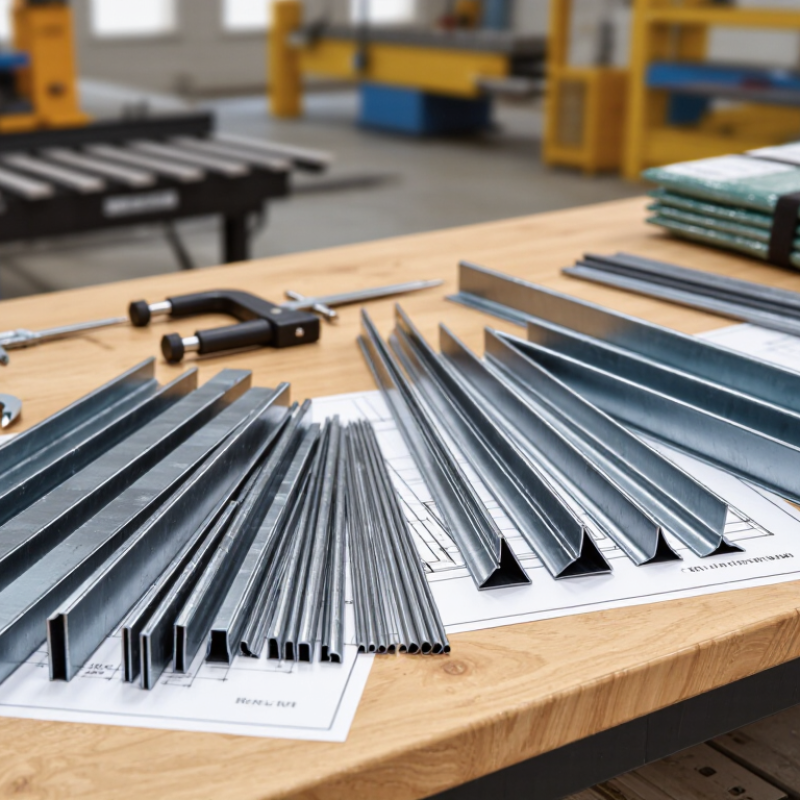
How to Choose China Top Angle Wall Manufacturers?
Angle walls define more than a building’s corners. They influence strength, protection, visual rhythm, and installation accuracy. In modern projects, an angle wall may connect two wall systems, reinforce a vulnerable edge, or create a clean transition between materials. Its role depends on the design load, location, and construction method.
A reliable manufacturer should understand these differences. Ask for technical drawings, material grades, dimensional tolerances, and verified test reports. Factory experience matters when angles must fit around doors, windows, insulation, or service openings. Small errors can become visible gaps on site. Worse, they may create water paths or installation delays.
Samples reveal practical details that specifications can miss. Check the edge finish, coating consistency, hole alignment, and connection method. Request evidence of quality control, including batch inspection and traceable production records. Experienced suppliers should also explain how products perform in local temperature, humidity, and fire-safety conditions.
Do not choose by price alone. A cheaper angle wall can require extra cutting, sealing, or replacement. That cost appears later. Still, technical documents are not perfect. Site conditions change, and drawings may contain overlooked assumptions. Discuss those risks openly with the manufacturer before production. A trial installation can expose problems early. It may feel slower, but it often protects the schedule.
Equal-angle steel sections are commonly used for wall framing, corner reinforcement, façade support, lintels, and connection details. The chart compares theoretical mass per metre for typical equal-angle profiles. Values are calculated from the nominal cross-sectional area using A = 2bt − t² and a steel density of 7,850 kg/m³. When evaluating a manufacturer, compare dimensional accuracy, material certification, coating quality, welding performance, and compliance with the required structural standards.
How to Choose China Top Angle Wall Manufacturers?
Set quality and material standards before comparing manufacturers. In practical factory evaluations, a low price often hides thinner steel, weaker welds, or inconsistent coating. Define the required steel grade, thickness, angle tolerance, surface finish, and load capacity. For outdoor projects, specify corrosion protection, such as hot-dip galvanizing, with a measurable coating thickness. Do not accept “premium material” as a technical description.
Ask each manufacturer for mill certificates, inspection records, and production samples. Check whether the certificate matches the delivered material, not only the quotation. A reliable supplier should explain its testing process clearly. Useful evidence includes dimensional reports, weld inspections, salt-spray results, and load-test data. Request photos of marked batches and packaging before shipment. Small details matter.
Visit the factory when possible, or use an independent inspection company. Observe storage conditions, cutting accuracy, welding quality, and final packing. During one review, a clean workshop looked impressive, but random measurements showed uneven wall angles. That mistake was easy to miss. It changed the supplier ranking. Manufacturers should also provide traceability from raw steel to finished products. Their answers must remain consistent across sales, engineering, and quality teams. Vague promises deserve a second look.
How to Choose China Top Angle Wall Manufacturers?
Evaluate China Manufacturers Through Capability and Compliance
Choosing a capable China angle wall manufacturer requires more than comparing quotations. A low price may hide thin material, weak welding, or unstable delivery. Ask for recent project references and inspect production samples. Check steel grade, dimensions, coating thickness, weld appearance, and packaging details. Small defects become expensive during installation.
A reliable factory should explain its process clearly. Request material certificates, dimensional inspection records, and load-test reports when applicable. Confirm whether testing is performed in-house or by an independent laboratory. Review equipment lists, production capacity, and quality-control checkpoints. Photos help, but live video inspections reveal more. Sometimes, factories present their best line first. That is worth questioning.
Compliance must be practical and documented. Verify business registration, export qualifications, workplace controls, and product standards required in your destination market. Ask how the manufacturer handles traceability, corrective actions, and rejected batches. Clear answers matter more than impressive certificates. Certificates can expire. Check their validity and issuing bodies. A factory may meet technical requirements but still fail on labeling or shipping documents. That gap can delay a project. Keep written specifications, approved drawings, inspection criteria, and delivery penalties in the contract. No supplier is perfect, including experienced ones. Leave room for independent inspection and honest review after the first order.
Capability and compliance evaluation matrix for angle wall component suppliers
| Evaluation Dimension | Verified Data or Benchmark | Recommended Evidence | Weight | Evaluation Standard |
|---|---|---|---|---|
| Manufacturing Capacity | Dedicated roll-forming, stamping, cutting, or extrusion equipment suitable for the required angle wall profile | Equipment list, production-flow chart, factory audit, and recent production records | 15% | Full score only when equipment capacity matches the required material, dimensions, and order volume |
| Material Control | Material grade, thickness, coating, and mechanical properties are defined on the purchase specification | Mill test certificates, incoming inspection records, heat or batch traceability | 15% | Material certificates must match the approved drawing and the applicable ASTM, EN, GB, or project standard |
| Dimensional Capability | Profile angle, leg length, thickness, hole position, length, and straightness controlled against an approved drawing | First-article inspection report, calibrated gauges, control plan, and capability study | 15% | Acceptance limits must be stated numerically; “standard tolerance” without a referenced standard is insufficient |
| Surface and Corrosion Protection | Coating type and thickness specified for the application, such as hot-dip galvanizing, electro-galvanizing, paint, or powder coating | Coating-thickness readings, adhesion or appearance records, and corrosion-resistance test reports when required | 10% | Coating performance must be evaluated against the project environment and the referenced specification, not price alone |
| Quality Management System | Documented controls for purchasing, production, inspection, nonconformity, corrective action, and document revision | Valid ISO 9001 certificate, scope statement, internal audit records, and corrective-action samples | 10% | Certificate validity, certification scope, issuing body, and manufacturing-site address must be checked independently |
| Product Testing | Testing covers dimensions, mechanical properties, coating, welds, fastener compatibility, or load performance where applicable | In-house test records and reports from a competent or accredited independent laboratory | 10% | Test method, sample identification, date, result, acceptance criterion, and laboratory competence must be recorded |
| Compliance and Traceability | Each shipment can be linked to raw-material batches, production dates, inspection results, and packaging labels | Batch records, barcode or lot-label examples, packing list, inspection release, and retention policy | 10% | Traceability should remain available throughout the agreed warranty and complaint-handling period |
| Environmental and Safety Controls | Controls for waste, chemical handling, worker protection, emergency response, and applicable local regulations | Environmental permits, occupational-safety procedures, inspection records, and ISO 14001 or ISO 45001 certification when applicable | 5% | Evidence must cover the actual production site rather than only a trading or sales office |
| Export and Logistics Readiness | Experience with export packaging, container loading, moisture protection, labeling, and agreed delivery terms | Packaging specification, loading photographs, shipping documents, and delivery-performance records | 5% | Packaging must prevent deformation, corrosion, and identification loss during the planned transport route |
| Commercial and Technical Support | Response time, drawing review, sample approval, engineering change control, warranty terms, and complaint closure | Written quotation, approved technical submittal, sample records, service-level commitments, and corrective-action reports | 5% | Select suppliers that provide clear written commitments instead of relying only on informal communication |
| Total Evaluation Weight | 100% | Use documented evidence and independent verification before approval | ||
When comparing angle wall manufacturers in China, start with complete pricing, not the unit price alone. Request costs for materials, tooling, packaging, inspection, and delivery to your port. A low quotation may hide thinner steel or weaker surface treatment. I have seen attractive offers become expensive after revisions and freight adjustments. Ask for a detailed pro forma invoice and confirm the quotation’s validity period.
Lead time should include drawing approval, sampling, production, inspection, and shipping preparation. Reliable manufacturers provide a realistic schedule with milestone dates. Customization may involve dimensions, hole patterns, coatings, colors, labels, or installation accessories. Send technical drawings with tolerances and material requirements. Confirm which changes affect price or delivery. Small changes can cause surprising delays. That part is easy to underestimate.
Tips: Ask for recent production photos, material certificates, sample reports, and references from similar export projects. Check whether the factory has experience with your destination’s packaging and documentation requirements. Export service should cover secure packing, carton or pallet details, commercial invoices, packing lists, and shipment coordination. Clarify responsibility for inspections and damaged goods before placing an order. A video audit can reveal storage conditions and production discipline, although it cannot replace independent inspection. Also, keep written records of every approval. Verbal promises are convenient, but they are difficult to verify later.
It reinforces corners, connects wall systems, and creates cleaner transitions between materials. It is not merely decorative.
Specify steel grade, thickness, angle tolerance, surface finish, load capacity, and corrosion protection. “Premium material” is too vague.
Request mill certificates, batch records, dimensional reports, weld inspections, and coating test results. Match certificates with delivered materials.
Samples reveal edge finish, hole alignment, weld quality, coating consistency, and connection details. Inspect several pieces, not one.
Observe raw-material storage, cutting accuracy, welding, packaging, and traceability from steel to finished products. A clean workshop can still hide uneven angles.
Confirm door, window, insulation, and service-opening dimensions before production. Small errors can create gaps, leaks, or delays.
Include approved drawings, tolerances, packaging rules, delivery dates, inspections, and remedies for incorrect dimensions. Avoid vague quality promises.
Request a response time, warranty period, technical contact, and process for installation questions or replacement parts. Promises need a practical process.
Not necessarily. Lower prices may hide thinner steel, weak welds, poor coating, or fragile packaging. The invoice is not the whole cost.
Yes, when practical. A trial can expose fitting problems before full production, although drawings may still contain overlooked assumptions. That risk deserves discussion.
Choosing the right China Angle Wall manufacturer is an important step in ensuring the safety, durability, and efficiency of a modern building project. Before contacting suppliers, define how the Angle Wall will be used and establish clear standards for material grade, structural strength, corrosion resistance, dimensional accuracy, and surface treatment. These requirements provide a reliable basis for comparing manufacturers and avoiding decisions based only on price.
A qualified manufacturer should demonstrate suitable production capacity, technical expertise, quality control procedures, and compliance with applicable project and export requirements. Buyers should also compare quotations, production lead times, customization options, packaging, shipping support, and communication efficiency. Before making a final selection, request samples, review drawings and specifications, confirm inspection procedures, and carefully examine contract terms. Clear warranty conditions and responsive after-sales support can further reduce project risks and help ensure consistent product performance from production through installation.
